Daily Affirmations - Day 1 - Place of Safety: The One Who Sustains
- Alisa B.

- 1 day ago
- 3 min read
This week's Theme: Place of Safety
Day 1: The One Who Sustains
Surely God is my help; the Lord is the One who sustains me (Psalm 54:4).
Eliza* recalls an incident from her adolescent years that began with a sudden, intense rainstorm. (Tropical downpours often arrive like that— sudden, drenching, furious).
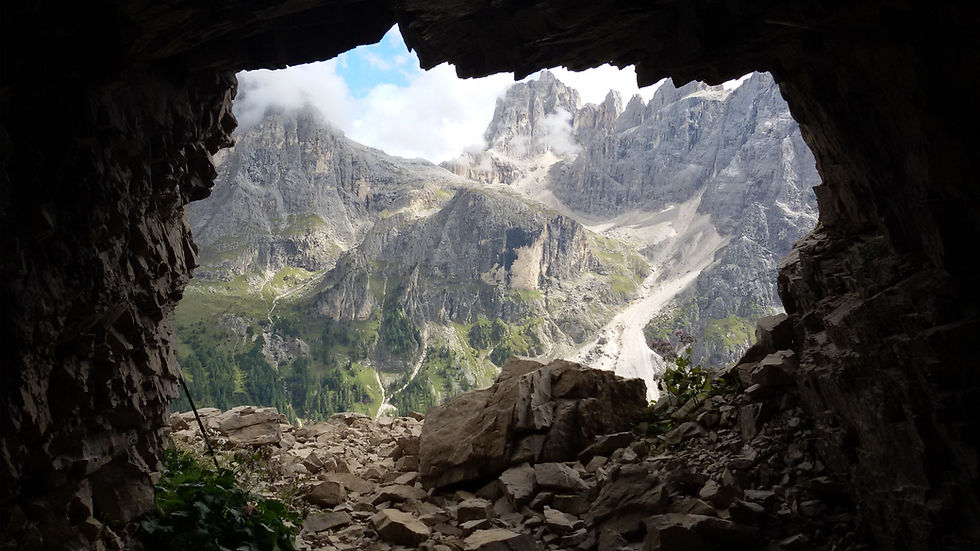
Eliza sought shelter in a hollow cave on an incline near the base of an enormous mango tree. It was a familiar spot— she had passed it all her life on the numerous treks from her house to the center of the village. But her place of refuge would quickly reveal a danger far greater than the furious rain.
Someone else— an unsavory character from another part of the village— had chosen "Eliza's cave" to escape the rain, and it wasn't long before his malevolent intentions became apparent. But the rain stopped just as suddenly as it had begun, and the young girl was able to make her way to safety.
Eliza has always thanked God for that narrow escape. Reflecting on the experience years later, she identifies two lessons she learned— the first, that safety is not always where you think it is, and the second, that God is our ultimate refuge.
Eliza freely admits that she does not understand all the ways of Providence; she knows that intervention does not always come immediately and directly into the resultant ills of a sinful world. But in the measureless instances when it does, it can be traced to the hand of a compassionate God who does not allow us to be totally consumed by the perils and dangers of a world filled with evil and human depravation (Lamentations 3:22-23).
Eliza's experience reminds me of a few people from Scripture who discovered that their "place of safety" was in fact a place of hidden danger. Yet, they too, ultimately found refuge in God. King David was one of these people.
Over much of his young adult life, David sought refuge from Saul's murderous plots and relentless pursuits in caves, crags, and mountain paths, and in remote towns. On one occasion, David spent time in the town of Keilah, even helping to defend the town against an attack by the Philistines. But Keilah did not return the favor:
Saul was told that David had gone to Keilah, and he said, “God has delivered him into my hands, for David has imprisoned himself by entering a town with gates and bars.” And Saul called up all his forces for battle, to go down to Keilah to besiege David and his men…
David said, “Lord, God of Israel, Your servant has heard definitely that Saul plans to come to Keilah and destroy the town on account of me. Will the citizens of Keilah surrender me to him? Will Saul come down, as Your servant has heard? Lord, God of Israel, tell Your servant.”
And the Lord said, “He will.” Again David asked, “Will the citizens of Keilah surrender me and my men to Saul?” And the Lord said, “They will.” (1 Samuel 23:7-8, 10:12).
Scholars believe David wrote Psalm 54 after he fled from Keilah and lodged in the Desert of Ziph (1 Samuel 23:13-14). The psalm, a desperate plea for help, acknowledged that God was his ultimate refuge.
The theme is repeated in many of David's psalms, even though for many years God did not deliver him from all the hardships of life on the run from an enemy with evil intent. Yet, David was able to see the hand of the Almighty in the midst of evil and distress: God is my help; the Lord is the One who sustains me (Psalm 54:4).
Even his eventual ascension to the throne as king did not end the troubles and evils David encountered— including quite a few of his own making. In fact, some of his bitterest days were ahead. But through the ups and downs he continued to trust God: My salvation and my honor depend on God; He is my mighty rock, my refuge (Psalm 62:7).
I believe David and Eliza both recognized an important truth— God is sovereign even in the many dangers, toils and snares of this life. Neither grumbled, criticized, cursed or blasphemed God for the way He "Gods." Neither suggested in attitude or expectation that the prevailing problems of humanity would go away if God could only govern the world better— perhaps with a few pointers from them.
Instead, both expressed humble gratitude for God's shelter from countless perils in their life— known and unknown. And both entrusted the rest to His sustaining grace, finding Him to be their ultimate refuge.
Life's questions are hard. We can take the advice of Job's wife and "Curse God and die" (Job 2:9). Or we can take Him at His word— and live— according to His perfect will, in His grace. Even when, perhaps especially when, we don't understand.
*Name has been changed.


Comments